

New To Music Theory? Start Here!
Most of my lessons require a basic understanding of music theory. Here's how you can gain those skills first.
By Jake Lizzio · Signals Music Studio · 700,000+ subscribers on YouTube
I honestly think that learning the basics of music theory is the hardest phase any student will go through. These topics require memorization, new vocabulary, and don't immediately seem practical.
Once they're conquered, though, music theory becomes seriously fun. The theory topics you'll study will immediately translate into new music being written, and you'll start hearing music in a way you never did before.
Every teacher has a different list of required topics based on their goals. My goals are to get you writing music as fast as possible, and understanding it better, all while honing your skills to navigate deeper levels of theory and complexity on your own. To do that, I'm suggesting the following resources.
The Entire Roadmap
You can save yourself a lot of frustration if you learn things in the right order. Here's an entire tour through each concept that you'll eventually want to master, and shown in the order that I suggest.

Learn Basic Music Theory For Free
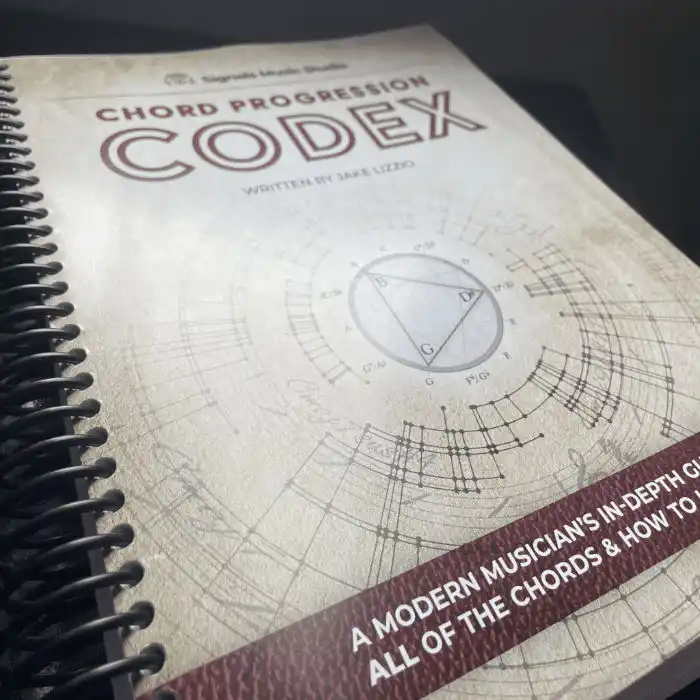
The most important fundamental topics in theory are all taught in Chapter 2 of my book, The Chord Progression Codex. It's 437 pages of guided text with charts and hundreds of audio examples focusing solely on chords, how they sound, where you've heard them, and how to use them in progressions.
Within that chapter, you'll learn the following concepts:
- Whole-steps and half-steps (or wholetones and semitones)
- How to read a music staff
- The Chromatic Scale and Musical Alphabet
- Basic Rhythm Symbols
- Interval names and sounds
- How to approach ear training
- Interval inversions
Those topics can be learned in a day, but memorizing every bit of terminology takes time. Ensure that the concepts make sense first, then you can gradually work on memorizing the details.
Beyond The Basics
Once you're past the basics, I suggest you begin writing chord progressions, because they're a great start for a song that has melodies, lyrics, solos, bass lines, and drum grooves. I have a totally free guide on that topic, featuring 8 video lessons, that will start you from the basics but take you well beyond.
Lastly, before you start getting into the super advanced stuff, you'll want to master the concept of modes. Understanding these will be critical for advanced studies, and fortunately, I've covered the topic back-to-back in this free guide:
For Guitarists
The free chapter linked above is not custom-tailored for guitarists, but instead is practical for all musicians. If you play guitar and want to master these concepts on that instrument, you should consider my Theory and Songwriting course, which covers these topics early on over the course of 45 video lessons and includes worksheets just for guitarists.
In addition to that premium course, I also have a pay-what-you-can course that is perfect for music theory newbies. The Interval Training Course will teach you how to train your ear, name intervals, and link that information to your fretboard. This all leads to hearing notes before you play them, so you're not just guessing at frets or sticking to shapes when you play guitar.
Intermediate to Advanced Lessons
Once you've got these basics out of the way, you should be equipped to navigate the scarier territories in music theory. However, you need to keep your goals in mind. It's far too easy to obsess over a theory concept and get nothing useful out of it.
If you'd like comprehensive and guided tutorials to your next steps toward music mastery, your best bet will be my premium courses.
Theory and Songwriting Course
Taught with a special focus on guitar, this course has a broad curriculum across 45 video lessons and over 100 PDFs to teach every skill a modern songwriter needs: how to write a melody, structure an entire song, write a bass line, craft a progression, change keys, and more.
Learn moreThe Chord Progression Codex
This 437-page spiral-bound tome is laser focused on harmony and crafting chord progressions. You'll learn about every type of chord, even the weird ones, and learn how they sound, where they get used, and how to use them in your own songs.
Learn moreReal Rhythm Guitar: Level 1
This course completely ignores everything to do with pitches, notes, and scales, and instead focuses solely on rhythm training. Learn common patterns, how to count them, train your internal metronome with foot-tapping, and conquer the world of timing once and for all.
Learn more