

Exploring Modal Mixture Part 1 - Major Keys
Using modal mixture allows you to immediately create awesome sounding chord progressions, and know exactly which scales will sound good over them.
By Jake Lizzio · Signals Music Studio · 700,000+ subscribers on YouTube
Modal mixture is one of the most powerful tools a composer can have for any genre. Instead of working with a single scale, you instead have access to all 12 notes, and a sure-fire way to make them sound good. It's a hugely important topic that is often misunderstood, so this lesson will focus on the basics: how to write a progression using modal mixture (aka "borrowed chords" or "modal interchange"), and what that really means in the grander scheme of music.
What you'll discover is that a borrowed chord, like the famous minor iv chord in major keys, isn't actually "from minor," and thinking of it like that can actually limit your composing options.
For site members and patreon subscribers, I've posted several practice tracks and a PDF to aid in your studies at the bottom of this post.
Writing A Chord Progression With Borrowed Chords
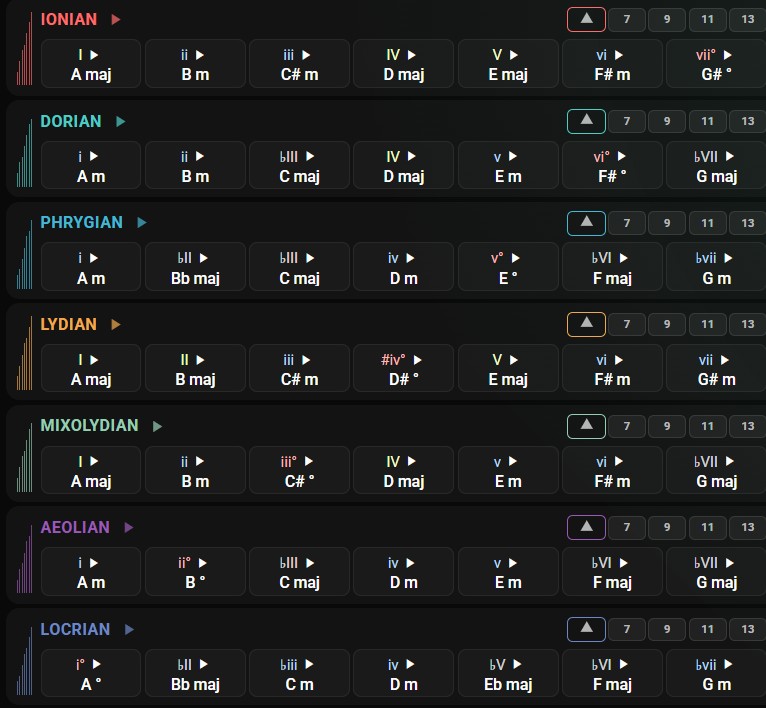
Let's pick a starting major key, like A. Here are the triads in that key:

I'm calculating those chords using the Modes Explorer from Melodic Mind. It was graciously made by Sean just to assist in this lesson, definitely keep it bookmarked - it'll come in handy for this lesson!
We'll begin with a simple progression using the I - IV - V chords here, so A - D - E.
Next, let's look at all the parallel modes of A major (not the relative modes), and the chords in those scales. Any of these triads can be borrowed for a bit and thrown into our A major progression. Over that chord, we can use the scale from which it came.
Let's grab that bVII chord from parallel mixolydian. We'll add G to our starting progression to create this:
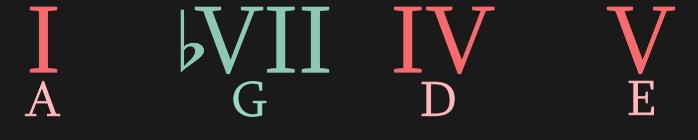
This is a fresh sounding progression that you can't create by just staying in A major. It could easily serve as a 4-chord loop for a verse, chorus, or jam section. Try playing it at different tempos to feel what sort of emotions it evokes, compared to our plain starting I - IV - V.
Chords Don't Actually "Come From" Anywhere Specific
Even though we constructed that progression by choosing chords from A Major and A Mixolydian, we can't say with certainty that G was borrowed "from mixolydian". Looking at our list of parallel modes, we can see that G (the bVII triad) is actually found in two other parallel modes: A Dorian and A Minor/Aeolian.
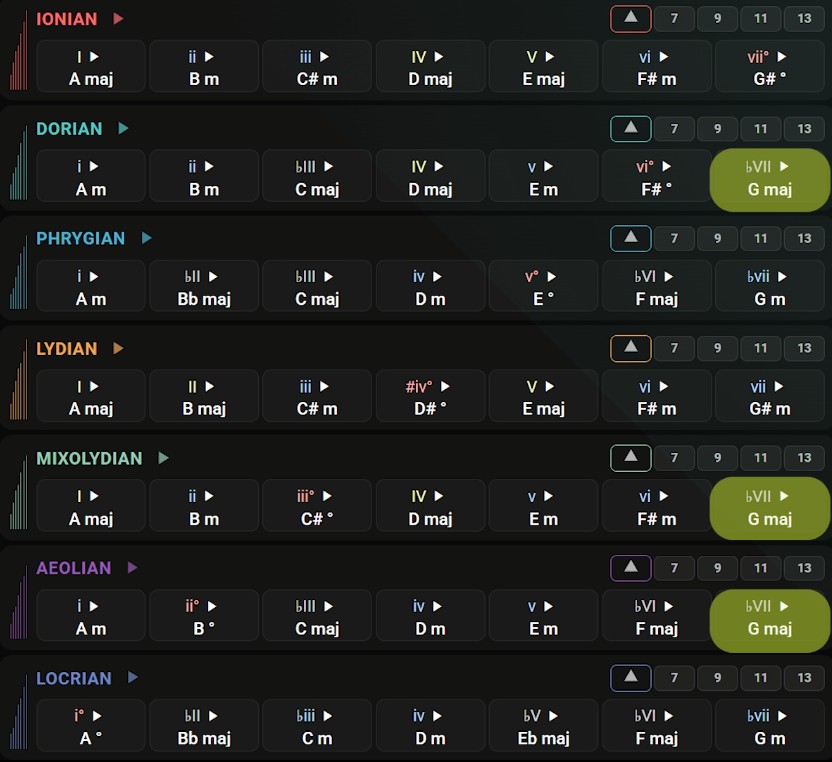
However, we can "prove" to the listener that G really does come from A Mixolydian by simply playing that scale on top. And we'll use regular A major over these three chords to "prove" they are from that scale. The effect is three chords that have standard major brightness, but one chord that gets a bit rowdy with mixolydian boldness. You'll hear and see that demonstrated in the video up top.
For some students, this is as far as they get with modal mixture - write a progression in a scale, then borrow from another one. That's a great start if you're just looking for a quick music-theory hack to write cool chord progressions and get some new sounds. But going deeper will help unlock more scales, chords, and emotions to compose with, and also give us a better picture of how Western music actually works.
Try It Out Yourself
Here's an example of me playing over that chord progression. The whole time I'm playing, I'm thinking about that movable seventh, and which one I should play. In between that activity, I'm free to wander around the A pentatonic major scale, which completely avoids sevenths. This allows the chords to do the talking, instead of me constantly playing "with the changes."
You can download the jam track for free if you have an account - grab it here!
Chords Can "Come From" Many Places
Our choice to play A mixolydian over that G chord was only one of many options. A deeper look at the chords in each scale shows that the A mixolydian scale not only contains G, but also A and D, chords I and IV.

That means we could have chosen to play A mixolydian over those three chords, then reserved the major scale for the last V (E) chord at the end. This completely changes the overall effect of the music - now we have three measures of rowdy rocking mixolydian, and only a brief moment of major's sweet relief.
Modal Mixture... Or Just The Major Key?
A simple fact I wish I had learned earlier is that writing in the key of A major does not mean only using the notes of the A major scale. Writing in the key of A major just means that the music is centered around an A major triad. With that centerpiece, it's still common to see notes outside the major scale, like the tritone, the b6, or the b7.
So instead of parsing that last progression as "mixing major with mixolydian," we could instead just simplify our mindset and say: this is the A major scale with a "flexible 7th". The 7th sometimes is major (G#) and when it is, it creates chords like the V, E major (E - G# - B). And sometimes, the 7th is flat, and it creates chords like bVII, G (G - B - D).
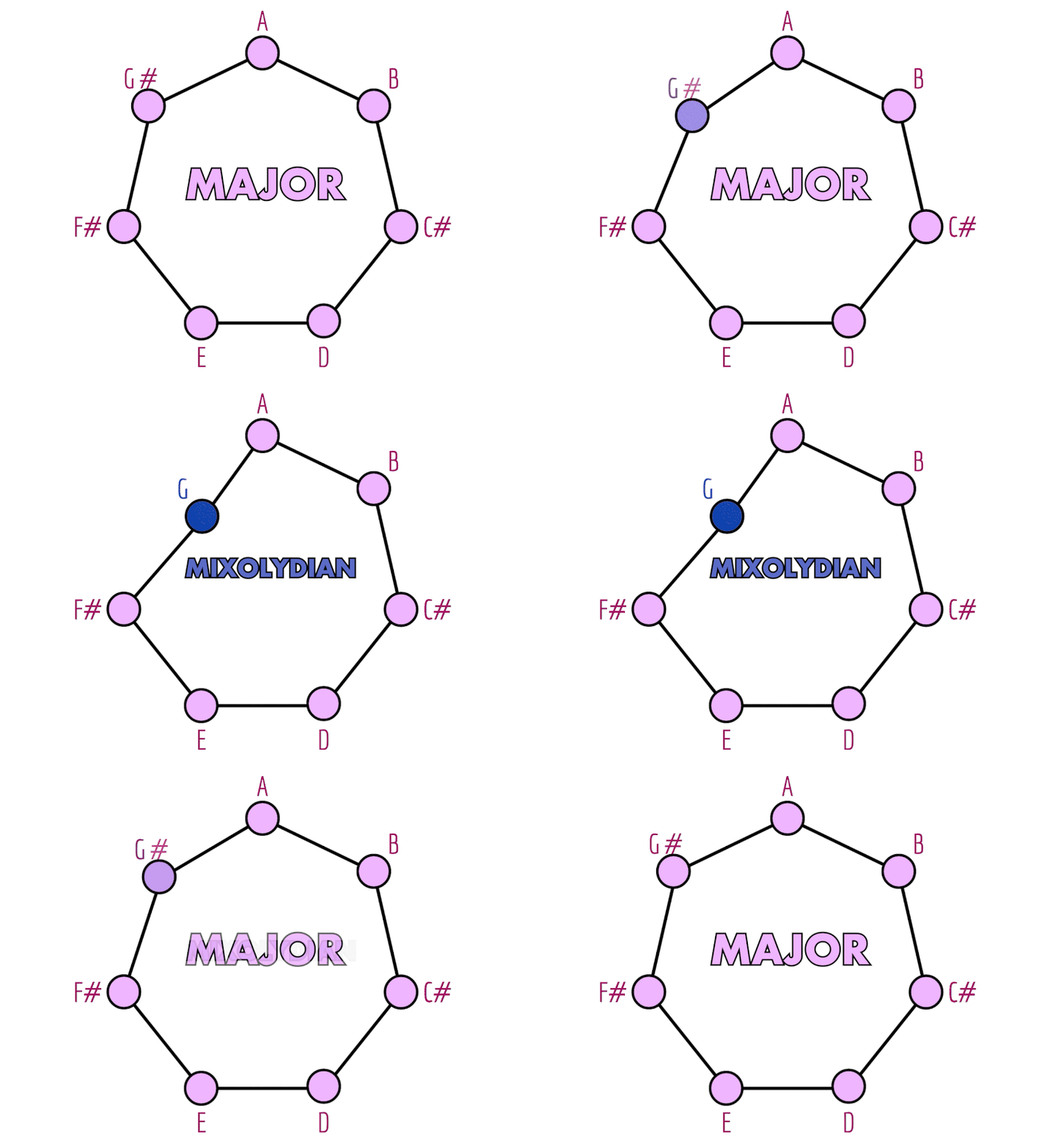
This is an important idea: we can modify our major scale by "poking" a note up or down, and it creates a new scale. The major scale is stable enough that it can easily pop back into place, so we can easily switch between these two scales. In this case, we poked major's seventh down, and observed how music might work with the 7th being in either position.
Avoiding Conflict
A genuine advantage to working with scales like we're doing here is that it prevents the worst-sounding dissonances from occurring. For example: over that G chord, the note G# doesn't sound that great. But by flipping to A mixolydian, we lower our G# to match that G chord.
On the reverse side, the E chord demands a G#. If we instead play a G natural, then we'll hear an E chord with both thirds: its major third (G#) and its minor third (G). That sound is good for the blues, but will cloud up rich harmonic progressions like the ones we're trying to compose.
Adding Extensions
A deeper level of modal richness is revealed when we add extended chords to our mix. Instead of only working with the triads of each scale, we'll extend each chord by a diatonic third, and use the chords to compose with. For example, extending each triad of A major gives us these chords here (note: the large "M" means "maj", while the little "m" means "minor"):

Now look at the extended chords of A mixolydian (the scale we get when we poke A major's seventh note downward):

With these in view, we can easily write a new modal mixture progression. This one will simply move from Amaj7 to Gmaj7. That's the I chord from A major, and the bVII chord from A mixolydian.
We Know Where Chords Do NOT Come From!
Looking at our that first chord, Amaj7, we can now narrow down its "origin" a little bit better. Before, when it was just an A triad, it could have been "from" A lydian or mixolydian. But now that it's Amaj7, and requires a G#, we can clearly state that this chord is not from A mixolydian (which requires G natural).
We can also look at Gmaj7 and say that it can't come from the A minor scale. Looking at the extended chords of A minor, we'll see G7 exists there (requiring F natural), while Gmaj7 requires F#.
So for this two-chord loop, I'll simply play the A major scale over the top of the Amaj7 chord, and then switch to A mixolydian over the top of the Gmaj7 chord. The result is a beautiful shifting of scenes, but remember - all we're doing here is playing with the major scale's true form, and then experiencing it with a lowered seventh.
Note - since that first chord could have technically come from A lydian, you should try experimenting with it over that chord. It will still work, but lydian is inherently "unstable" and delicate, so for a fast-moving chord change you may not have ample time to really develop its flavors. More on lydian in a bit though.
Neighbor Keys
Find a key on the circle of fifths. The keys adjacent to it are "neighbor keys," scales that can be created by changing one note. The key of A for example has two neighbors: D to the left, and E to the right.
If you compare A major to D major, you'll see they're nearly identical, with one difference: A major contains a G#, and D major contains a G natural. If we reorder that D major scale, we'll see the A mixolydian scale.
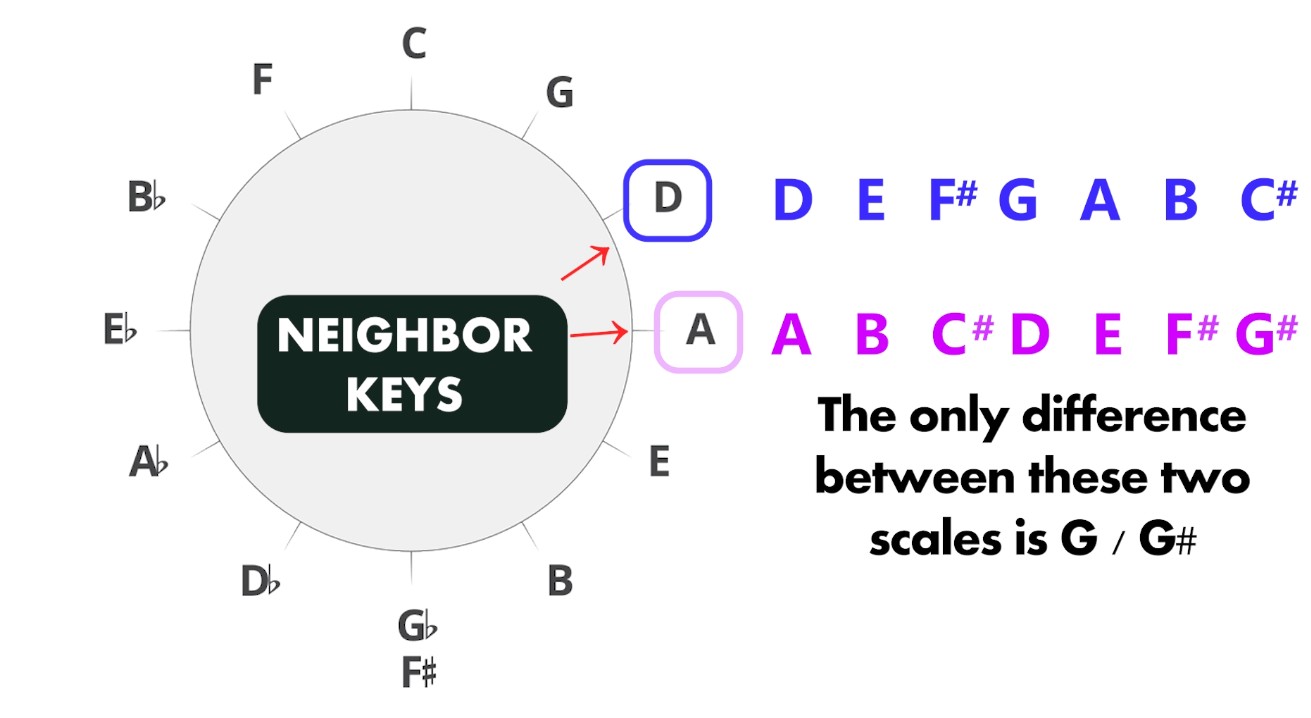
So when we poke the 7th note of A major downward, we get a mode of D major. But personally, I don't want to think of any of these progressions as involving the D major scale! These were all progressions "in the key of A" in my mind, and all we did was modify our A scale a tiny bit. The fact that D is a neighbor key is just another piece of the puzzle to keep in mind as we continue our exploration.
The other neighbor to A major is E major. The difference between these two is that A major contains a D natural, while E major demands D#. If we start with the notes of A major and "poke" the 4th note up, we get A lydian (the 4th mode of E major), which contains these chords:

Mixing Major and Lydian
Let's write a new progression using chords "from A major," and then introduce a chord "from A lydian." This time, we'll grab extended versions of I - IV and V to create Amaj7, Dmaj7, and E7, and then throw in the borrowed II7 chord from Lydian to create this 4-chord loop, one you might hear in a jazz song:

When playing over this progression, I might think along these lines: The I - IV - V chords are from A major, so I'll use the A major scale over them. The II7 chord is from A lydian, so over that chord, I'll play the A lydian scale.
Or, I might just think: "I'm in the key of A major, but the 4th really needs to be raised to accommodate this B7 chord". If I accidentally play a D natural on top of that chord, we'll be hearing a B7 chord with both thirds - again, a nasty sound if you're looking for pure harmonies.
But personally, I don't want to think: "I'm temporarily moving to the neighbor key of E major for this B7 chord". That's a convoluted strategy in my mind, but it is helpful to recognize how closely related major and parallel lydian are.
But here's the result of that thinking, in musical form.
Beyond Neighbor Keys
This whole lesson has been focused on very small changes to the major scale, like shifting one note down, or one up. But major can handle serious surgery and spring back to life instantly, and by poking more than one note at a time, you can end up with other scales to mix it with that aren't immediate neighbors.
For example - it's quite common to mix A major and A minor. This is, in effect, taking the major scale and lowering its 3rd, 6th, and 7th. Doing this takes you a quarter-turn to the left on the circle of fifths.
To experience this sound at its simplest level, let's again write a simple progression in A major, and then borrow a chord from A minor to use that scale over it. We'll move from the extended versions of I to vi in A, and then borrow the iv chord "from A minor" to create a bittersweet loop.
We can play over this with the simple strategy of using A major over those first three chords, and then switching to A minor over that last chord. The result is outstanding:
If you want to experiment more with the change from I - iv, check out this jam track in E. It should come in helpful for the next few scales we'll discover.
Beyond Parallel Modes
We're now getting to the crux of the matter. As we've seen, simple modifications to our major scale can create parallel modes. But not every simple modification will result in a popular or well known scale!
Let's return to this last progression - the first three chords had a welcoming home in A major, making that a perfect scale for all three. But that last chord, Dm, only requires one note that isn't in the A scale: F natural.
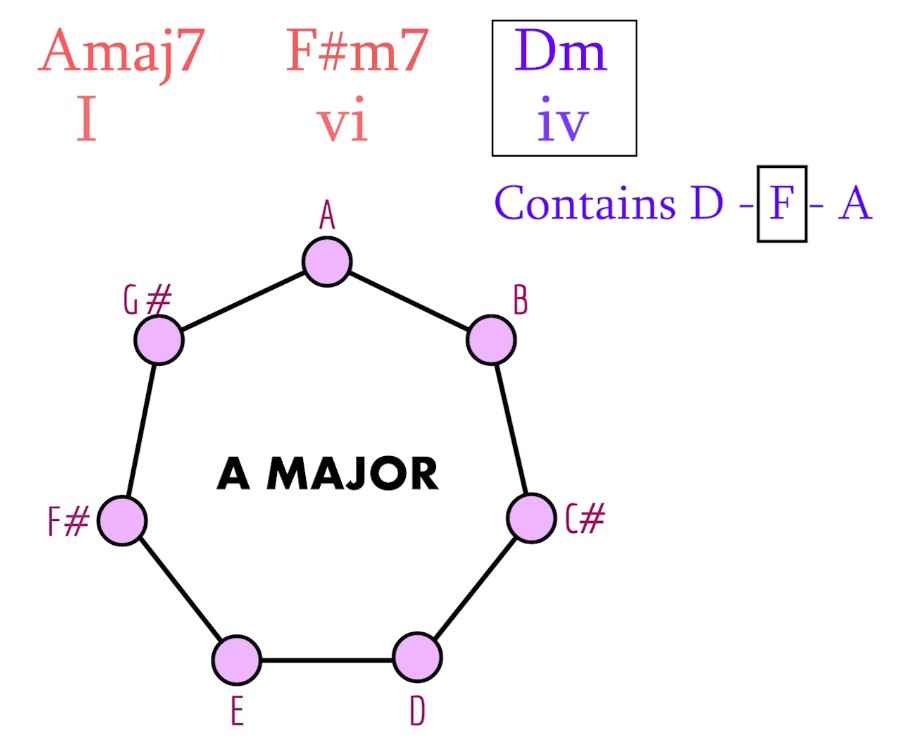
In the last example, I changed three notes of my A scale to accommodate that Dm chord. But we could have just modified our major scale by a single note: lowering its 6th (F# becomes F). That creates this set of notes, called A Harmonic Major. It works perfectly on top of that iv chord, and might even be the preferred choice for some ears. But it's not a parallel mode of the major scale at all!
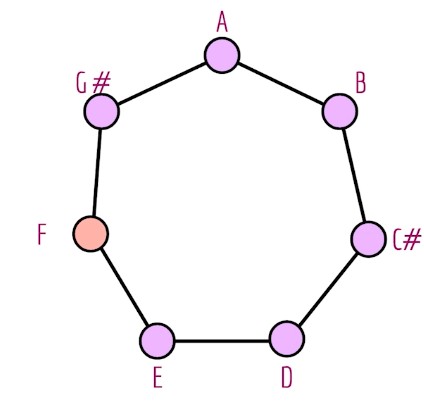
If you start making little adjustments to the major scale, you'll stumble into "weird" or "advanced" scales like this one. The modes of melodic minor, harmonic minor, and harmonic major are all scales that pop when you do this kind of scale-modification: raising one or more notes up or down to match an out-of-key chord.
Why You Should Learn "Weird Scales"
As you've just seen, small shifts to the major scale can cause weird scales to pop up, making them valuable to study. But working in reverse, knowing "weird scales" gives you good options for how to treat specific chords.
For example, I'm in love with the Mixolydian b6 scale, and I know it contains a minor iv chord. That means whenever a iv chord pops up, I know it could potentially "come from" this scale, and I can choose to play that scale over that chord.
That scale and its chords are all discussed in detail in my book, the Chord Progression Codex. If you want to better understand harmony, and utilize even more types of chords beyond the simple ones mentioned in this lesson, you'll find it all in there.
Real World Examples
The signature moment in Weezer's "Buddy Holly," which is also in A major, is the minor iv chord (Dm) with a tasty guitar lick. The guitarist clearly plays a major third (C#), proving that he's not just looking at that minor iv chord and thinking "I should play the A minor scale". Instead, he's preserving that major third, utilizing either Harmonic Major or Mixolydian b6 (since no 7th is played, it could be either scale).
Another striking chord appears at the end of "Layla" by Eric Clapton/Derek and the Dominos, near the closing vamp. It's in C major but a Bb7 appears:
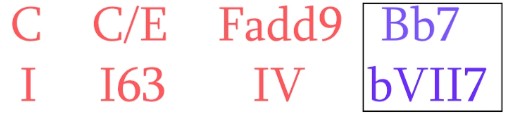
The simple approach is to recognize Bb7 "could come from parallel minor," and we play that scale on top. It'll sound fine, but I appreciate the band's approach here more: preserve that major third, and just lower the other notes of the major scale to "match" the chord. Doing so again creates that Mixolydian b6 scale that I enjoy so much, and it's what you'll hear atop that chord.
What's Next
This is just an intro to the idea of modal mixture, as I think about it. Chords rarely "come from" specific places, but there are clear instances of where they don't come from. We can easily modify our parent major scale to accommodate these chords and avoid conflict - when we do that, we'll create a parallel scale that will either be a mode of major, melodic minor, or harmonic minor.
But doing this process in the minor key requires a bit more thought. The minor key is not as stable as the major key, and you can't just poke its notes around willy-nilly without it losing its identity. So in the next part of this lesson, we'll focus on minor key modal mixture.
Modal Mixture Masterclass
Late last year I did a 6 part masterclass with my site members and Patreon subscribers on this topic, going deeply into different progressions, scales, and choices. The feedback was excellent, and all the lectures, slides, and musical examples (from myself and students) are still available for anyone supporting this site through membership.